
If you’re heading into 2026 thinking, “We need to publish more web content,” you’re not wrong—you’re just reaching for the slowest (and most costly) lever first.
Most websites don’t have a content shortage. They have a performance problem.
Chances are, your existing pages are already doing some of the hard work: Ranking on search engines, pulling in traffic, and answering the right questions. But they’re also quietly leaking opportunity by failing to inspire confidence, convert, or guide visitors toward a clear next step. And as search behavior continues to shift (hello, AI summaries, chatbots, and zero-click behavior), raw traffic alone becomes a less reliable growth strategy.
My advice as Creative Noggin’s Content Specialist: Start with a content refresh to fix what’s already almost working.
Instead of pouring time and budget into net-new web content, focus on the pages that already have momentum—and optimize them to do more. That means delivering clarity in the first 10 seconds, backing up your organization’s claims with concrete proof, and offering a clear next step for someone who is interested but not yet ready to convert.
Once refreshed, those pages become the foundation for short-form social and email, so your single update fuels multiple channels.
If you only publish new content in 2026, you’ll be building from scratch every week. So instead, let’s explore how to fine-tune what you already have, add proof, and repurpose it so your content will perform even as search, social, and AI keep changing.
We’ll explore:
- A step-by-step guide to your content refresh, complete with a practical checklist
- Strategies for building trust with your content in 2026
- Best practices for refreshing service pages and evergreen content
- Tips for adapting your refreshed content to additional platforms, including AI prompts for inspiration
- A realistic 90-day roadmap to keep you on track
Start Here—What Content to Refresh First in 2026 (and Why)
As marketers, we often love chasing the newest thing. However, the fastest, biggest wins on your website rarely come from the newest ideas. They come from the pages already attracting attention—like that niche blog post you threw together on a caffeinated whim in 2021 that somehow drives 5% of your traffic.
With that in mind, below are the priorities I recommend when upgrading your website content.
Priority #1: Pages that already drive revenue
These are your low-hanging fruit. Even small improvements here can accelerate conversions and move leads through the funnel faster.
Start with:
- Your top-performing service pages
- Your best campaign landing pages
- Your Contact / Get a quote / Sign up / Buy now paths (and the pages that support them)
Why not the homepage first? Homepages are broad by design. Service pages, landing pages, and contact paths are where buying decisions actually happen.
Priority #2: Pages that already get attention
Traffic is a gift—unless it lands on a page that confuses people, or fails to earn trust.
Refresh:
- Your top 10–20 pages by traffic over the last 6–12 months
- Posts/pages that rank, but have declining CTRs or low time on page
Why not just draft new blog posts? Improving a page that already ranks allows you to leverage existing momentum—you’re building on a channel that already exists instead of starting from scratch.
Priority #3: Evergreen posts that answer buying questions
These posts often do the heavy lifting in the background—educating, qualifying, and pushing someone toward “maybe we should talk.”
Prioritize content about:
- Pricing, timelines, process, comparisons, “best of,” FAQs
- The questions your sales team answers weekly (or daily)
The 30-Minute Content Audit
This isn’t a full-blown content audit. It’s triage—the kind you can do quickly, confidently, and without a 40-tab spreadsheet.
Staying organized is key. Use our 2026 Content Triage Scorecard to quickly identify the 10 pages you should prioritize, including exactly what to fix.
Download the 2026 Content Triage Scorecard
Step 1: Pull three lists
Use GA4 and Search Console (and your CRM, if you have one).
Grab:
- Top pages by traffic
- Top pages by conversions (form fills, calls, key events)
- Pages/queries with high impressions but low clicks (CTR opportunity)
Step 2: Label each page as one of the following
- Keep (it’s doing its job)
- Update (it’s close—fixable)
- Consolidate (when two pages are competing, combine and strengthen them)
- Retire (outdated or no longer relevant to your brand)
Step 3: Look for the “leaks”
These patterns tell you what to fix first:
- High traffic + low conversion = Clarity, proof, or CTA problem
- High impressions + low CTR = Title or meta mismatch (or wrong intent)
- High bounce rate on service pages = Unclear offer, weak trust, slow load speed, or bad UX
Once you’ve completed your 30-minute audit, it’s time to start refreshing your content.
Want to let the experts handle your full marketing content refresh?
Refresh My Website Content
The 2026 Content Refresh Checklist (What to Change on Each Page)
You don’t have to rewrite every sentence. Focus on removing friction and making it easy for visitors to take a next step.

1) Clarity upgrades (What visitors need to know within 10 seconds)
Most pages fail because they don’t answer three questions quickly: “Am I in the right place? Can they help me? What do I do next?”
Fix that with:
- A headline that says who you help + what you help them do
- A short “Here’s what you get” section above the fold
- 3–5 scannable outcomes (not just capabilities)
2) Intent alignment
Match your content to what the visitor is trying to decide or understand—not just what you want to explain.
- Check ranking keywords to ensure you’re honing in on the real question behind the click
- Respond to your visitor’s need more clearly and effectively than your ranking competitors
3) Conversion upgrades
Don’t make people hunt for the next step.
- Put a primary CTA in multiple places (not just in the navbar and the footer)
- Include a secondary “not-yet-ready-to-convert” next step (e.g. Download Our Guide, Subscribe to Our Newsletter, or Download the White Paper)
4) Search + AI visibility basics (without jargon)
You don’t need to chase every algorithm update. Instead, focus on clarity and trust:
- Update headings to match real questions people ask—and answer them in the body copy (this is huge when optimizing for AI search and chatbots)
- Add FAQs (which can also become scripts for your sales, support, and customer success teams)
- Make your expertise visible through authorship, credentials, and experience
Next, let’s explore the element of trust that most online content is missing.
Add Proof Like a Pro
In 2026, trust is the bottleneck.
Everyone has a claim. Few have evidence.
Here’s the proof that tends to move the needle fastest.
Add proof in this order:
- Specific outcomes
Exact numbers are best. When possible, include a “before and after.” - Mini case studies
Problem → Approach → Result (short and skimmable) - Social proof*
Incorporate testimonials, logos, review highlights, certifications, and other third-party credibility. - Process proof
Show a step-by-step of what working together looks like. - Risk reducers
Trials, satisfaction guarantees, price transparency, and free consultations can provide the final nudge your visitor needs in order to move forward.
*Not all testimonials are created equal. Even the most flattering customer quote may not contain the amount of context needed to make it a quote worth featuring.
The ideal featured customer testimonial contains:
- Context: Who is the customer and what was their situation before they found you?
- Your product or approach: How exactly did you improve their situation? The more specificity, the better.
- Emotional payoff: How did your customer feel after you helped them (relieved, proud, optimistic, etc.)?
- Implicit recommendation: A natural statement of endorsement (e.g. “I’d absolutely recommend…”) that doesn’t sound scripted.
For example, here is a glowing review for our agency featured in numerous locations on our website:
“From the launching of new world-class destinations to brand creation, multimillion-dollar multi-cultural campaigns, and the development of touchpoint strategies to include owned and earned channels that powerfully move the needle, Creative Noggin has been my go-to partner when I am under pressure to deliver with excellence. Not once have they failed to improve my work and make me a star, all while delivering results that exceed expectation. The cherry on top is that they do all this with a transparent billing process that helps me control budgets and keeps awkward billing conversations from ever having to be a part of our work together. I love working with a team that makes it about the “work” and not about egos or billable hours. This is the definition of partnership.”
– Paul Chapman, Chief Marketing & Communications Officer at Pre-K 4 SA
Curious what could have inspired such a blush-worthy quote? Check out our branding and marketing work for Pre-K 4 SA!
Why is proof the priority for SEO/GEO and conversions in 2026?
People arrive with partial context—often from a skimmed AI summary, a forwarded link, or a quick click while scrolling on social media.
SEO and GEO attract eyes. Then, proof fills in the gaps, turning audience members’ curiosity into confidence and attention into action.
The Service Page 2026 Refresh Template (Copy and Paste This Structure)
If your service pages are vague, they won’t convert (even if your work is excellent). Here’s a structure that keeps it simple and clear, while encouraging trust.
Use this flow:
- Who this is for (and who it isn’t)
- The problems we solve, described in language familiar to the customer
- What you get including deliverables and outcomes
- How it works in 3 to 5 steps
- Proof in the form of mini case studies and testimonials
- FAQs such as cost, timing, and what information you will need from them
- CTA (such as “Sign Up”) secondary CTA (such as “Download the Guide”)
- Note: Your CTA(s) should be incorporated throughout your service page.
The Evergreen Blog Post Refresh Template (Turn Old Posts Into Lead Drivers)
Evergreen posts (blog posts that remain relevant and valuable over time) are often your silent sales team. A refresh turns them into closers.
Here’s how to refresh them:
1) Upgrade the top
- Update the intro to reflect current realities
- Ensure alignment with your visitors’ intent
- Add a table of contents
2) Add decision content
- Share price ranges, timelines, and pros/cons your customer should know about
- Ask and answer “When is our solution a bad fit?” (this builds trust)
3) Add proof and a next step
- Incorporate one mini case study and/or a customer testimonial
- Add a relevant CTA
4) Improve skimmability
- Use short paragraphs, more subheadings, and succinct language
- Organize key lines into bullet points (like these!)
Don’t have time or don’t want to refresh your content yourself?
Audit My Content
Repurpose Each Refreshed Page Into Short-Form Content
Refreshing your blog post is just the beginning. Now, it’s time to get even more mileage out of your high-performing web content through cross-channel distribution.
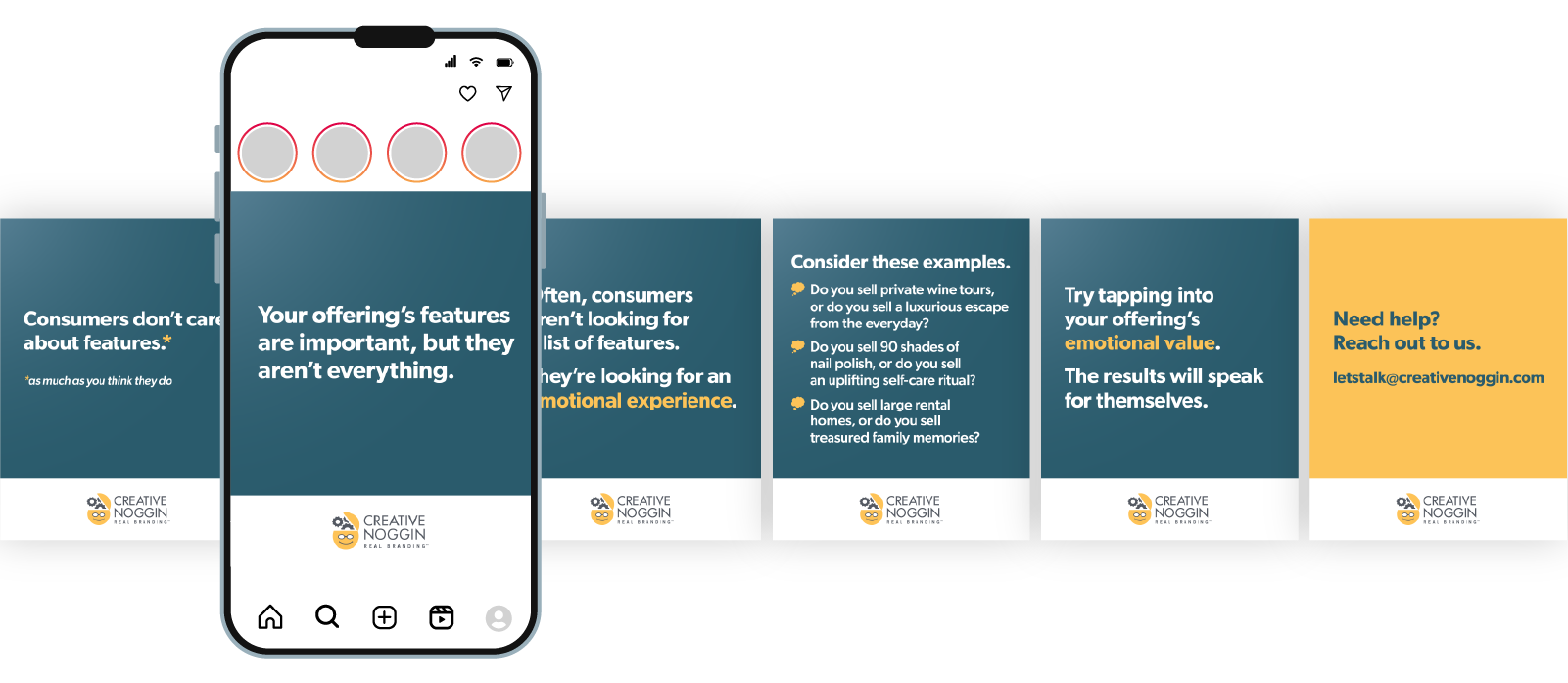
For every refreshed page or post, create:
- 5 short social media posts (e.g. myth debunked, tip, checklist, proof, CTA)
- 1 LinkedIn carousel or PDF mini-guide (7–10 slides)
- 1 newsletter (talk about an issue relevant to subscribers, add key takeaways, and link to the full post)
- 1 sales enablement snippet (that your team can copy + paste)
Here are some AI prompts to inspire your cross-platform distribution:
- “Pull one contrarian insight from this blog post and use it to write copy for a LinkedIn carousel and caption that challenges common assumptions.”
- “Generate five likely customer objections and answer each in two sentences.”
- “Extract three snippets of proof and rewrite them as punchy problem -> solution bullet points.”
- “Summarize this post into a newsletter intro that tees up the problem without giving away the solution.”
- “Turn this blog post into a one-paragraph sales follow-up email.”
A 30/60/90-Day Content Refresh Roadmap
This is what a realistic refresh sprint looks like for fast results without chaos.
Days 1–30: Quick wins
- Refresh top 5 revenue pages and top 5 high-traffic pages
- Add proof blocks and clearer CTAs (e.g. “Get a Content Audit”)
- Fix leaks (confusing headlines, missing CTAs, and weak proof)
Days 31–60: Build the proof library
- Create 3 to 5 mini case studies
- Standardize testimonials, logos, outcomes, “how it works” blocks
- Build a library of reusable trust-building content blocks you can drop into any page
Days 61–90: Scale + systemize
- Refresh 10 evergreen posts that influence buying decisions
- Set a quarterly refresh cadence and assign ownership to one or more team members (or to your outsourced marketing department)
- Create a cross-platform distribution checklist, ensuring refreshed content feeds into social media and email content
What Success Looks Like (KPIs to Track Without the Noise)
Pick a few signals that are important to your organization’s goals (and that marketing can actually influence).
For example, track:
- Primary KPIs: Leads, calls, purchases, or donations attributed to refreshed pages
- Secondary KPIs: Conversion rate by page, CTA click rate, or time on page
- Search health: Impressions and CTR for priority pages, and queries
- Distribution: Email click-through, social saves/shares, and referral traffic
This gives you a clear snapshot of how your content refresh is performing—and some impressive metrics you’ll be glad to reference at your next performance review.
Common Mistakes (So You Don’t Waste Your Refresh)
Most content refreshes fail for one or more of these reasons:
- Only updating dates/wording without improving clarity + proof
- Refreshing everything equally instead of prioritizing revenue pages
- Skipping internal linking and CTAs, causing visitors to hit a dead end
- Publishing the refresh but not repackaging/distributing it
- Allowing the refresh to become a one-time project rather than an ongoing effort due to no assigned “owner.”
Maximize Conversions with a High-Impact Content Refresh
If your content seems “fine” but conversions are slow, a refresh is usually the best fix.
For the highest ROI on content marketing in 2026, start with the pages already closest to increasing revenue, add proof where trust is missing, and build a repurposing habit that makes content compound.
If you take away one thing, let it be this: Your best content opportunities are probably already on your site—they just need a little TLC. With a bit of patience and your 2026 Content Triage Scorecard at hand, anything is possible.
If you want help spotting and seizing the biggest opportunities, you know where to find me.
Get started ASAP with the help of our experts. We’ll start with a quick triage and show you the top pages to refresh first—including exactly what to change.
Get a Content Audit